
Gadfly—An Uncomfortable Goad to the Colorado Republican Political Scene by Anna Stronger
Insight into Political Proclamations in Colorado
Political proclamations in Colorado offer a unique glimpse into the priorities and beliefs shaping the state’s governance. At Common Sense Colorado, we closely monitor these proclamations because they reveal much about the political climate in the state, particularly concerning the Republican Party.
These official statements not only highlight important issues but also reflect the values and direction embraced by lawmakers and party leaders. By examining political proclamations in Colorado, we can better understand both the progress and the challenges facing the state’s political landscape.
The State of the GOP in Colorado: The Good and the Bad
Common Sense Colorado is dedicated to telling the truth about the state of the GO in Colorado. We aim to reveal both the strengths and weaknesses of the Colorado Republican Party. On one hand, the GOP has maintained a strong presence in many rural and conservative parts of the state, championing policies that align with their base. On the other hand, internal divisions and struggles to appeal to a more diverse, urban electorate have posed significant challenges.
Political proclamations in Colorado often underscore these tensions, revealing where the party succeeds and where it falls short. Our mission is to provide clear, honest information that helps Coloradans understand the full picture of their Republican Party—its achievements, shortcomings, and evolving identity—as it navigates the state’s complex political terrain.
Join us as we deep dive into the realities of the GOP and the impact of political proclamations in Colorado.
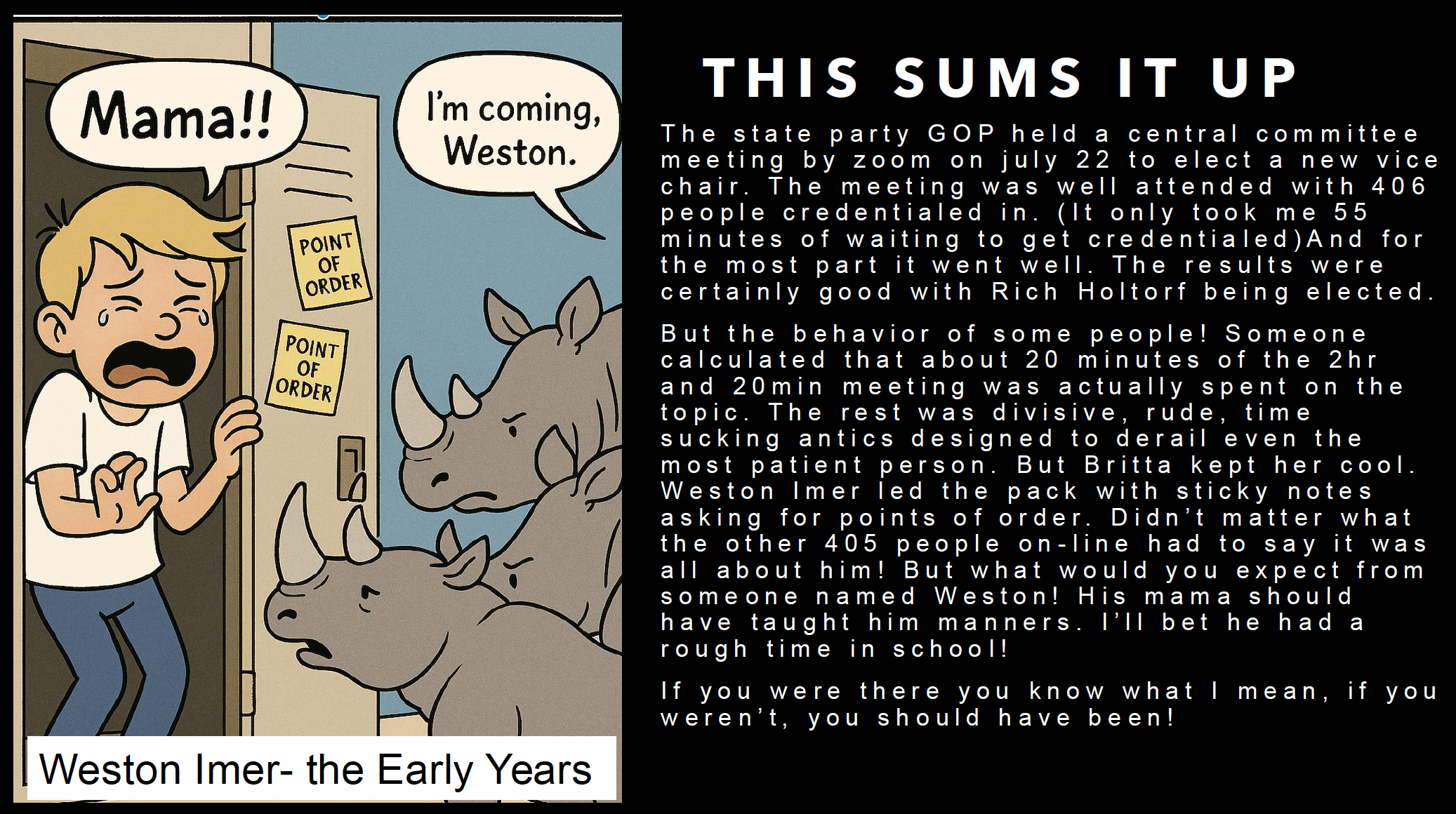
Opinion: Closing Colorado’s GOP Primary Would Be a Disaster
A growing faction within the Colorado Republican Party is pushing to withdraw from the state’s open primary system. Their proposal? Replace it with a closed, party-run primary held on a single day, requiring photo ID, in-person voting, and hand-counted ballots.
The logistical and financial hurdles of such a plan are staggering. It would take more than 30,000 volunteers or staff and at least $250,000 just for printing. These are resources the party simply does not have. Limited voting locations would create long lines, driving down turnout and engagement.
Even more extreme is a proposal to cancel the primary altogether and rely solely on the caucus and assembly process. If that happens, just a few dozen insiders could handpick candidates for every race, effectively silencing nearly a million registered Republicans, including 50,000 military and overseas voters. Rural counties would suffer the most, with delegates expected to travel hundreds of miles to participate in centralized assemblies.
This move is not about efficiency or values. It is about control.
Those leading the charge claim that open primaries, which allow unaffiliated voters to participate, have led to Republican losses. But this theory is deeply flawed. Colorado Republicans were losing elections long before open primaries existed. In fact, under the old closed system, the GOP still failed to win statewide races for nearly two decades.
Meanwhile, red states like Alabama, Indiana, Ohio, Tennessee, and Texas continue to succeed under open primaries. Ohio, once a competitive swing state, is now reliably Republican. The issue is not the rules of the game, it is how the game is played.
Ironically, some of the same GOP leaders advocating for a return to caucus politics were the very ones who opposed Donald Trump in 2016, when he lost Colorado’s caucus to Ted Cruz. In 2024, the GOP’s own endorsed candidates won just 4 of 18 races, a dismal 28 percent success rate. That is not a primary problem. That is a messaging problem.
Canceling the primary could also hand Democrats a massive gift. Unaffiliated voters, who make up nearly half the electorate, would receive ballots listing only Democratic candidates. That would give Democrats free advertising and a head start in both the primary and general elections.
Let us be honest. This is not a principled stand for party integrity. It is a desperate attempt to hold onto power in the face of broader electoral struggles. If Democrats proposed canceling their primary, Republicans would rightly call it undemocratic. So why are we considering doing the same?
Colorado Republicans do not need fewer voters. They need more. They do not need to tighten the tent. They need to expand it. Instead of retreating into purity tests and conspiracy theories, the GOP must offer a bold, inclusive vision that resonates with today’s voters, especially the unaffiliated majority.
Until that happens, no change in primary format will save the party from continued decline.
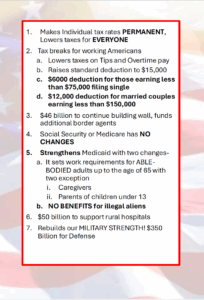
Highlights: One Big Beautiful Bill (BBB)
Congress passed the One Big Beautiful Bill in early July. President Trump signed it into law on July 4th. Some of the highlights are underscored on the attached document.
Heard on the Street
Hat tip to Teller County Republicans for assisting neighboring counties and their candidates with fundraising and canvassing over the course of the campaign.
Big Story Out of the State House
Congratulations to Rose Pugliese and her team for assisting the following candidates to end the super-majority in the State House:
- Republican Candidate Dan Woog (House District 19) won by 121 votes over Jillaire McMillan.
- House District 16 Republican candidate Rebecca Keltie leads by 7 votes over uber-socialist Stephanie Vigil.
- Much like Team Weld, District Attorney Michael Allen, Congressional Candidate Jeff Crank, and Larry Liston assisted Rebecca Keltie and State Senate Candidate Stan VanderWerf. They had a team of 25-50 people each Saturday since July, canvassing door-to-door to turn out the vote. Rebecca Keltie also had a great team that set about curing the approximately 160 ballot envelopes that had signature discrepancies. That effort alone likely resulted in her pulling 7 votes ahead.
- House District 50 Republican candidate and rising star Ryan Gonzales won by 563 votes.
There is a saying that victory has a thousand fathers, but defeat is an orphan. With such narrow victories in these three contests, any volunteer who spent a day making phone calls, knocking on doors, or curing ballots can take credit for helping these three candidates across the finish line.